Add a New Webhook
Navigate to the Integrations section in your dashboard and click Add New Webhook to register a new endpoint.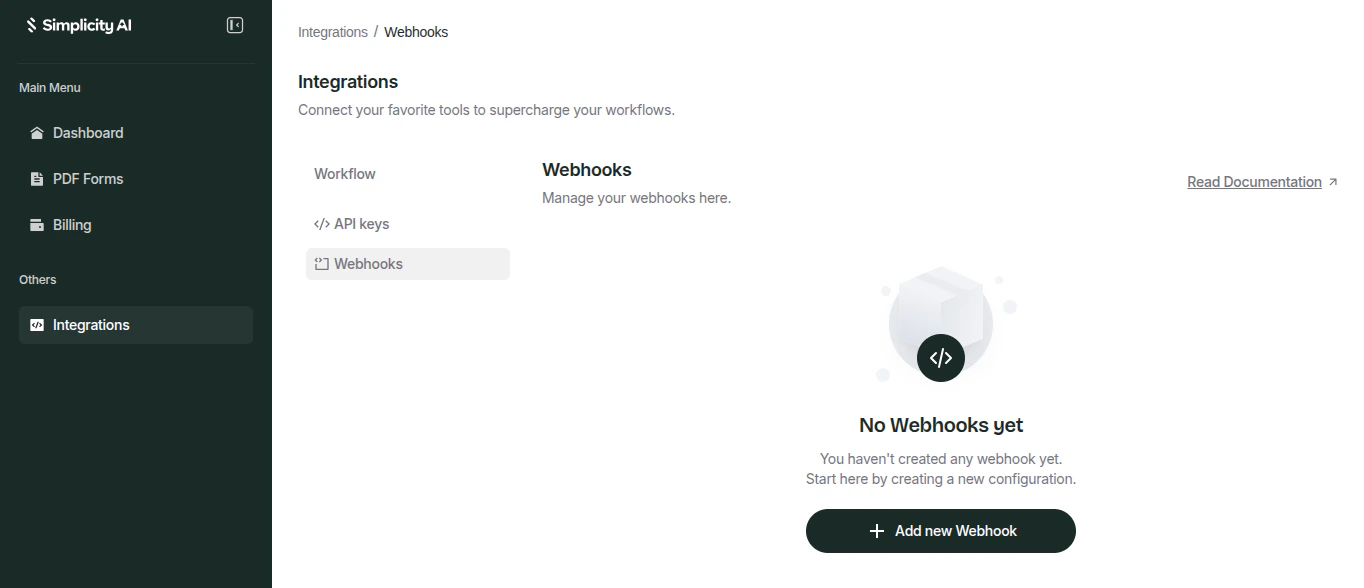
Configure Your Endpoint
Enter your publicly accessible endpoint URL and set an Authorization header value.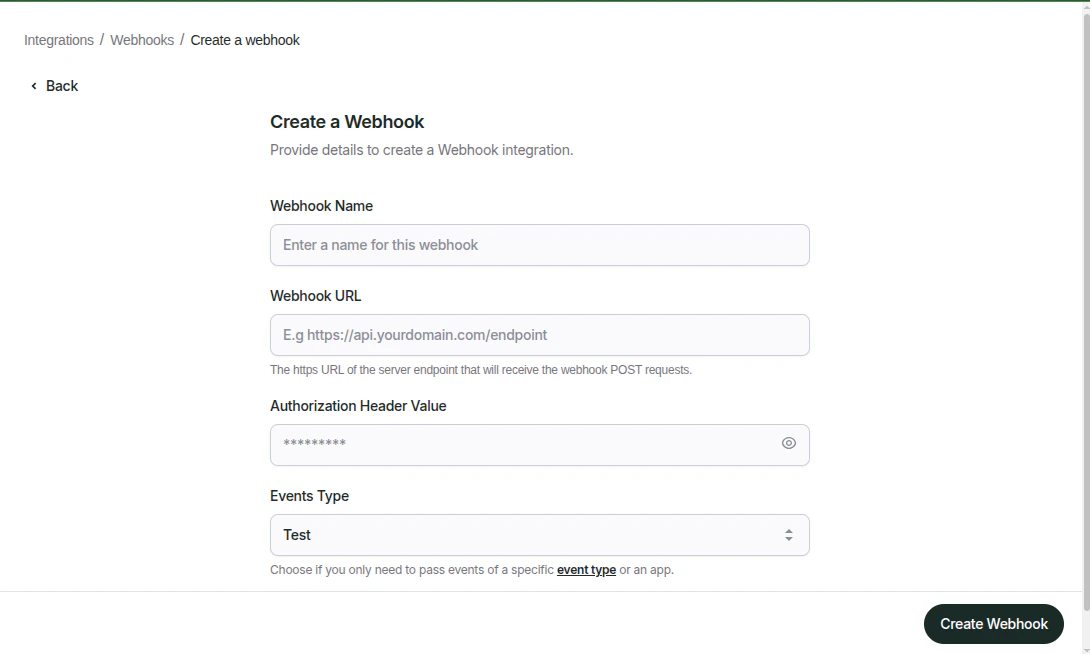
200 OK status code to acknowledge receipt. Any other response code will be treated as a failed delivery and may trigger a retry.Manage & Monitor
From the Webhook Dashboard, you have full visibility and control over all your registered webhooks.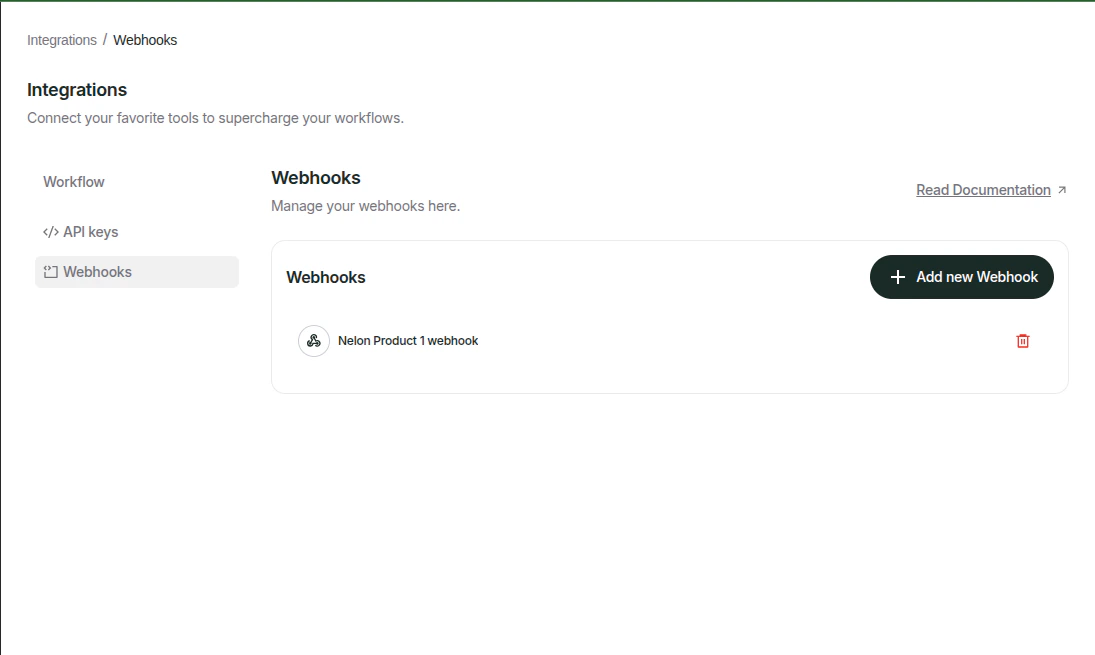
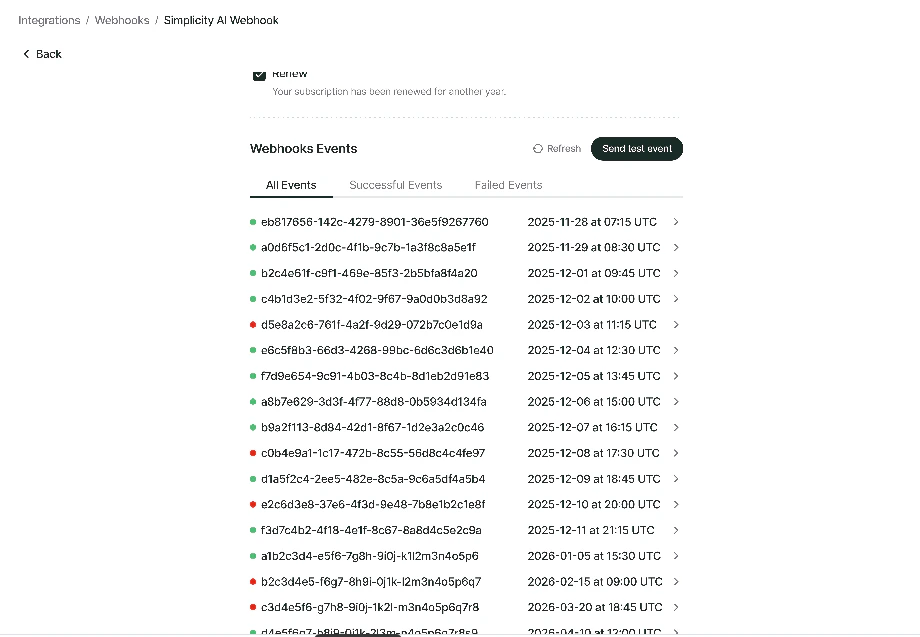
- You can also see all your successful and failed webhook events from your webhook dashboard
- View delivery history — inspect every event that was sent, including the full request payload and server response.
- Debug failures — identify failed deliveries, see the error response returned by your server.
- Monitor status — quickly see which webhooks are active, paused, or experiencing repeated failures.
- Edit or delete — update your endpoint URL or authorization header at any time, or remove a webhook entirely.
If your endpoint is temporarily unavailable, Simplicity AI will automatically retry failed deliveries with exponential backoff to avoid data loss.